 AI-generated
You take your iron tablets regularly, but are the timing and schedule suitable? A good intake plan considers absorption, tolerability and the specific prescription.
Elemental iron is the key amount
The amount of iron compound on the packaging is not automatically the amount of elemental iron. Dose planning requires knowing how much iron each dose actually contains. If unsure, show the packaging and leaflet to your pharmacy or practice.
Why every other day?
Oral iron can temporarily raise the regulatory hormone hepcidin. This may reduce absorption of another dose the following day. Absorption studies with traditional iron salts show this effect from about 60 mg elemental iron, among other findings. This provides a rationale for a single dose every other day.
In 2024, the AGA recommended no more than one dose daily and named alternate-day dosing as a possible, often better-tolerated option. This does not mean that every daily dose of 60 mg or more is wrong. Anaemia severity, treatment goals, preparation and tolerability remain important. Do not change a prescription yourself.
Morning on an empty stomach or evening?
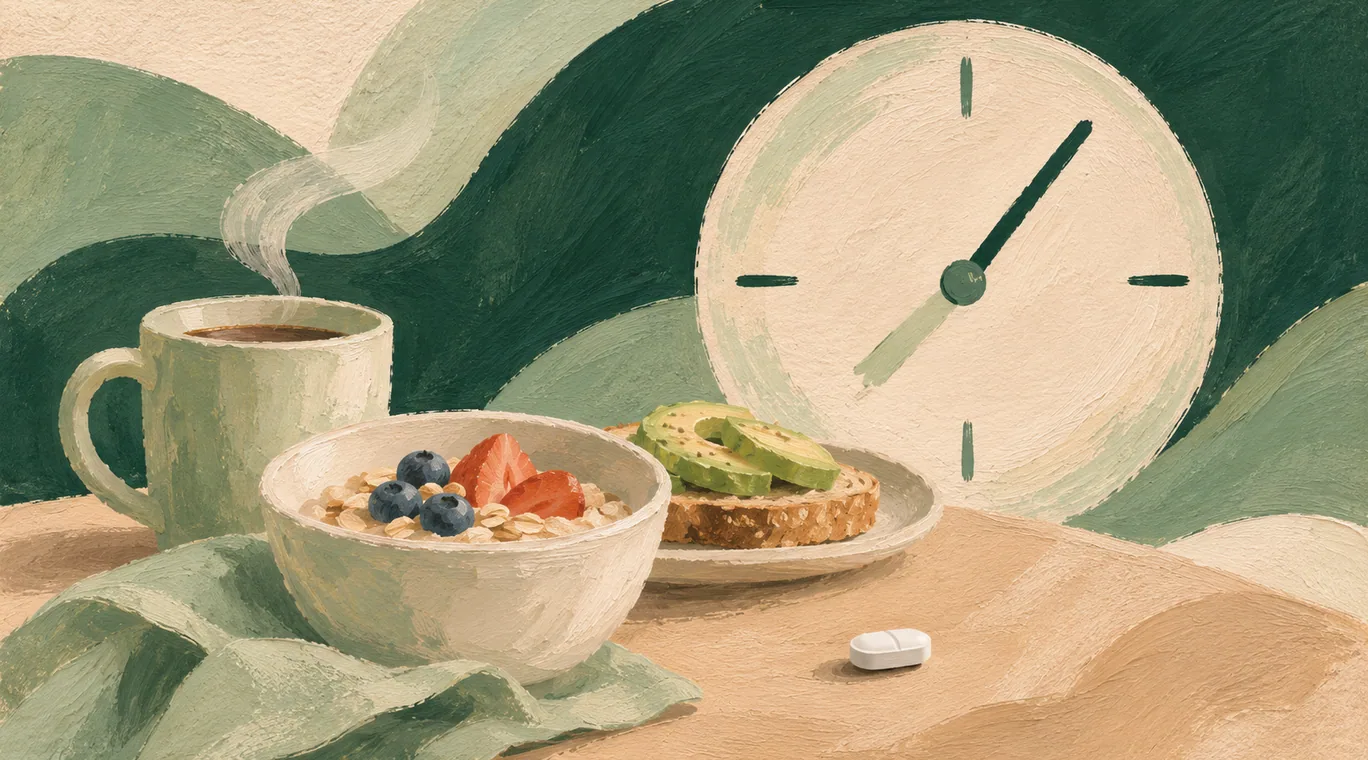
Many traditional preparations are absorbed better on an empty stomach. A practical example is at least 30 minutes before breakfast. Alternatively, evening intake at least two, in everyday practice often two to three, hours after the last meal may be possible.
Single morning doses are well studied in hepcidin research. Evening intake is mainly a practical alternative, rather than proven equivalent for every woman. It does not mean an additional evening dose after a morning dose. Preparations may also have their own instructions.
Coffee, tea and minerals
For traditional iron salts, allow sufficient spacing from coffee, tea, dairy products and calcium supplements, often about two hours. Magnesium and zinc supplements should not simply be scheduled simultaneously either. Medicines may require different intervals: levothyroxine and certain antibiotics need a separate plan.
Is vitamin C essential?
The AGA recommends adding it to support absorption. However, a randomised trial with 440 adults found comparable improvements with iron alone and iron plus vitamin C. Missing vitamin C is therefore not automatically an intake mistake, and does not sufficiently explain a lack of increase.
What about stomach problems?
Taking iron on an empty stomach is not an end in itself. If nausea or pain causes you to stop the tablets, the plan needs adjustment. Taking iron with food can be a deliberate compromise despite reduced absorption. A tolerable schedule you can follow is more important than an unsustainable ideal rule.
Review your situation with the iron tablets check. It does not prescribe a new dose.
Sources
- AGA 2024 – Clinical Practice Update on treatment
- Stoffel et al. 2017 – alternate-day dosing
- Stoffel et al. 2020 – dose and hepcidin
- NHS – taking ferrous sulfate
- NHS – interactions with ferrous sulfate
- Li et al. 2020 – randomised comparison of vitamin C